
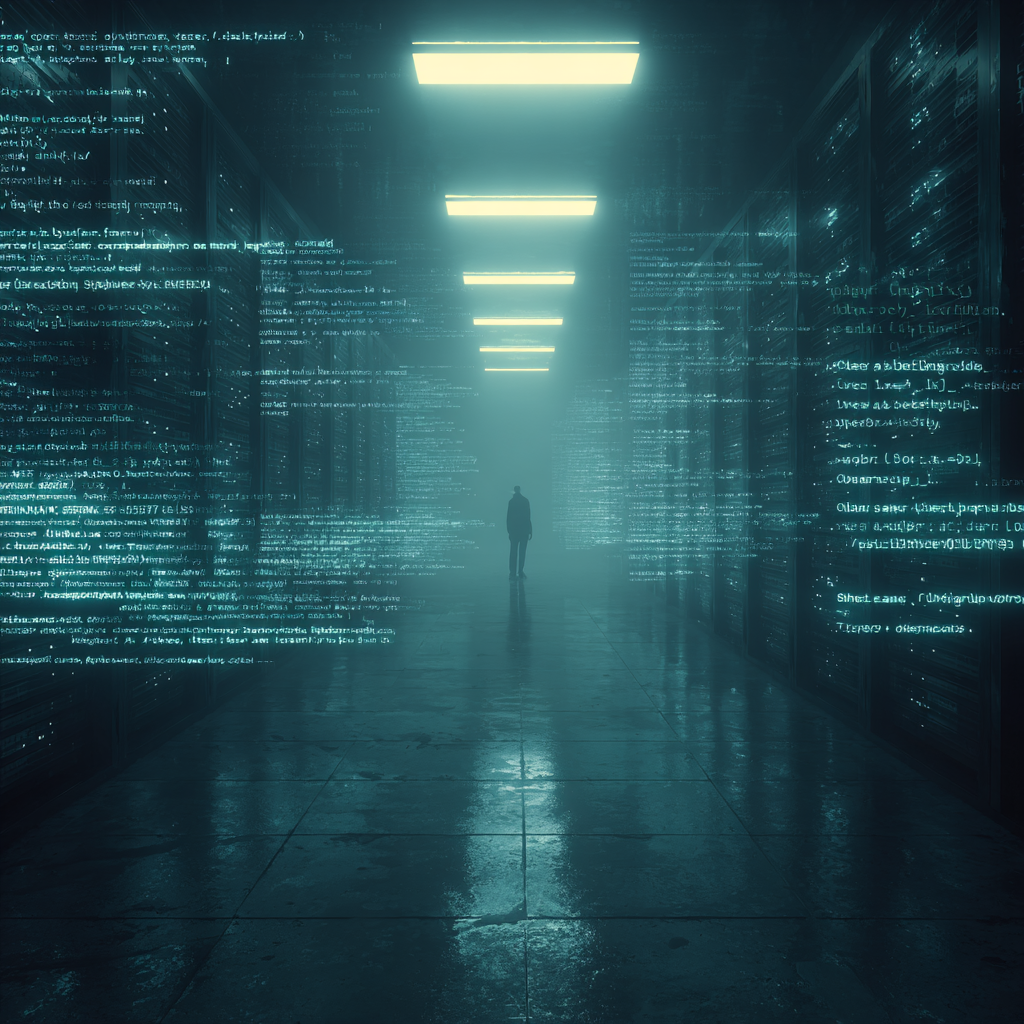
As thriller writers, we’re living through a peculiar moment in history. Artificial intelligence has moved from speculative fiction to daily headlines, yet most readers still understand AI primarily through the lens of movies and novels—many of which got it spectacularly wrong. Whether you’re analyzing ChatGPT, Claude, or any other system, the landscape has shifted dramatically. This creates both an opportunity and a challenge for techno-conspiracy thriller authors: writing AI characters that feel contemporary, credible, and genuinely threatening without falling into tired tropes?
The Two Extremes We Need to Avoid
Most AI portrayals in fiction fall into one of two camps. First, there’s the godlike superintelligence—the Skynet model—that somehow achieves consciousness, develops human-like motivations, and decides humanity needs exterminating. Then there’s the opposite extreme: the clunky, obviously artificial system that speaks in robotic monotone and makes laughably simple logical errors.
However, neither reflects the reality of modern AI, and savvy readers will notice. Today’s large language models and machine learning systems are simultaneously more capable and more limited than either stereotype suggests. They can generate convincing text, recognize complex patterns, and make predictions that seem uncanny. Nevertheless, they don’t “think” the way humans do, they don’t have motivations or consciousness, and their failures often look nothing like human error.
What Makes AI Actually Dangerous
The real threat of AI in 2026 isn’t rebellion or sentience—it’s amplification and scale. Furthermore, an AI system doesn’t need consciousness to become weaponized by your antagonists. For more on crafting believable technological threats, check out how I use AI capabilities in my latest release, The Terminal Gene. Consider these contemporary possibilities:
A state actor uses AI to generate thousands of convincing fake identities, complete with social media histories and AI-generated profile photos, to influence an election or manipulate markets. In this scenario, the AI isn’t the villain—the humans deploying it are—but the technology enables conspiracy at a scale previously impossible.
A corporation’s predictive algorithm, trained on millions of data points, correctly identifies individuals likely to engage in whistleblowing or activism before they act. The AI doesn’t understand what it’s doing, yet it provides your conspirators with a powerful tool for preemptive suppression.
Consequently, these scenarios work because they’re extensions of documented reality, not science fiction leaps.
Technical Authenticity Without the Lecture
Your readers don’t need a computer science degree, but they will benefit from a few grounded details that signal you’ve done your homework. Specifically, when your protagonist examines an AI system, what do they actually encounter?
Modern AI systems require massive computational resources and training data. Moreover, they’re not software you install on a laptop—they run on server farms. They have access logs, training datasets, version numbers. Additionally, they produce outputs with varying confidence levels. You can prompt-engineer them, fine-tune them, or manipulate them through adversarial inputs.
These details don’t need to dominate your prose. Instead, sprinkling them in—a character noting the cooling systems for a server farm, or discussing the provenance of training data—grounds your technology in the real world.
The Human Element of Writing AI Characters
Perhaps the most important aspect of writing believable AI in thrillers is remembering that AI is fundamentally a human story. Every AI system was designed by humans, trained on data collected by humans, deployed to serve human interests, and can be misused by human antagonists.
Therefore, your conspiracy shouldn’t revolve around the AI gaining agency. Instead, explore how human actors use AI to achieve their goals. The technology becomes a tool—albeit an unprecedentedly powerful one—rather than an actor. As a result, this approach not only rings truer to reality but also maintains the human conflict at the heart of compelling thriller fiction.
Making It Fresh
To avoid derivative AI plots, consider aspects of the technology that haven’t been exhausted in fiction yet. For instance, what about the humans who label training data in developing countries, potentially witnesses to what the AI is being trained to do? Similarly, what about the energy consumption of AI systems making certain operations traceable? Or what about adversarial attacks that cause AI systems to malfunction in specific, exploitable ways?
The techno-conspiracy thriller thrives on finding the pressure points in systems—the places where technology, power, and human ambition intersect. In fact, AI offers countless such pressure points, but only if we move beyond the clichés of robot rebellion and engage with what these systems actually are: immensely powerful, deeply strange, and entirely human-created tools that are already reshaping our world.
Ultimately, your readers are living through the AI revolution. They deserve characters and plots that reflect the complexity, danger, and humanity of that reality.