
A thriller listener experiences your story through a single sensory channel when they press play. Every pause, whisper, and accelerating sentence reaches them through one voice, or sometimes two. That makes casting the conspiracy narrator one of the most consequential decisions an author makes after the manuscript is finished. Choose well, and the audiobook narrator amplifies every shadow in your plot. Choose poorly, and even a tightly plotted conspiracy loses its grip before the first twist arrives. For techno-conspiracy writers, where atmosphere does as much work as plot, that choice deserves the same scrutiny as any chapter outline.
The Maxx King series shows why this matters. Three audiobooks are already out, the fourth is in production for the upcoming trilogy collection, and a new book follows in January. Consequently, each casting choice now echoes across a growing catalog rather than a single release. Listeners who finish one book often start the next within days, so the voice they hear becomes part of the series itself, as recognizable as the cover design. Authors who plan for that reality early protect both their listeners and their brand.
Audiobook Narrator Casting for Thrillers
Audiobook narrator casting for thrillers demands a different ear than casting for romance or memoirs. Techno-conspiracy stories lean on technical dialogue, rapid scene shifts, and quiet menace. Therefore, a narrator must deliver jargon without sounding robotic and hold tension without shouting. Auditions should test exactly those skills, using a dense lab scene and a whispered confrontation rather than a generic sample chapter. Also, have each candidate read a short passage twice—once calmly and once with rising dread—so you can hear their full range before deciding.
Authors also benefit from treating casting as an investment rather than an expense. A narrator who understands paranoia as a slow build will pace your reveals better than any edit can. For a closer look at why consistency pays off across books, our earlier post on Series Credibility in Fiction Writing explains how trust compounds, and a familiar voice reinforces that trust every time a listener returns. Likewise, a narrator who feels invested in the material often contributes suggestions on pronunciation and tone that improve the final product.
Single vs Dual Narration in Audiobooks
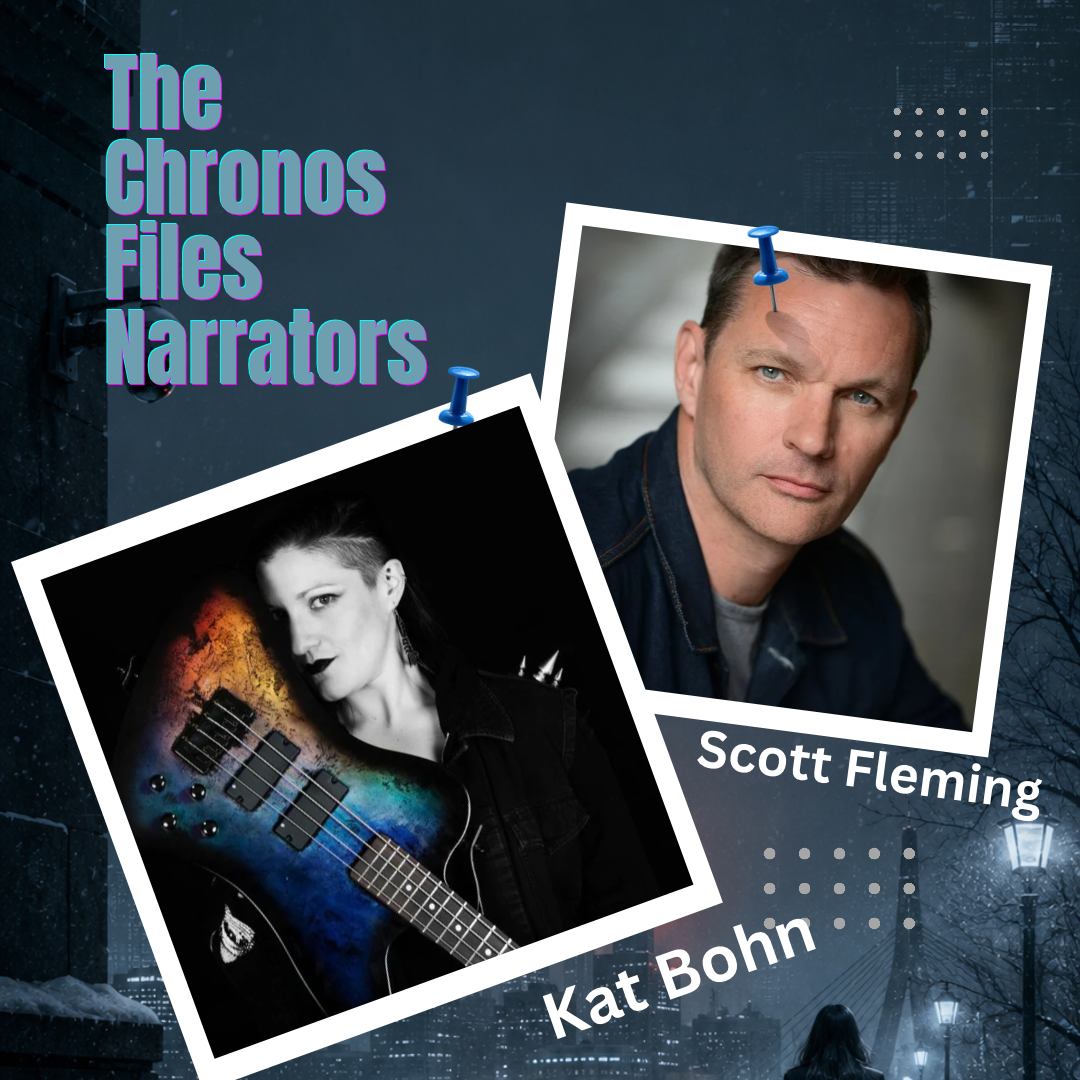
Single vs dual narration in audiobooks comes down to what the story needs the listener to feel. A single narrator creates intimacy and continuity, which suits a tightly focused protagonist. Dual narration, with one voice per point of view, gives each perspective its own texture. In a duet, two narrators share scenes and dialogue, which adds energy but also risks pulling listeners out of the story if the voices clash. For a conspiracy thriller, a single voice often sustains paranoia best, because the listener never gets a break from one mind closing in. However, a story like The Chronos Files with rival perspectives can benefit from the contrast that two narrators provide. That’s why I asked both Kat Bohn and Scott Fleming to narrate.
Audiobook Narrator Identity Across a Book Series
Audio identity across a book series works much like a recurring musical theme. Once listeners associate a voice with your protagonist, switching narrators mid-series can feel jarring, even when the replacement is excellent. Therefore, plan for the long term before you sign the first contract. Ask whether the narrator can commit to future installments; for series continuity, it is critical.Furthermore, having a consistent voice allows you to market the series as a unified collection, which enhances each sample, trailer, and review excerpt you share.
Extending Reach with Audiobooks
Extending reach with audiobooks opens your series to readers who rarely sit down with print. Commuters, runners, and long-haul drivers consume thrillers in motion, and they often binge entire series. Meanwhile, a polished audio catalog gives those listeners a clear path from book one forward. Each new release, whether the second or the tenth title, then becomes another reason for them to return. In addition, audiobook listeners tend to discover authors through narrators they already trust, so a strong casting choice can introduce your work to entirely new audiences.
Casting the conspiracy, then, means thinking like both a director and a marketer. Match the voice to the story, decide whether one narrator or several serves it best, and protect that choice across every installment. Listen to three audition samples this week, compare them against your most tense scene, and choose the voice that makes you want to keep listening. Your readers will notice the difference long before they can explain it.